
Estimated reading time: 5 minutes
There are two types of people in the world. People who love meetings and people who hate them. This dynamic highlights the importance of planning effective meetings.
Much of this is due to the fact that people spend hours in meetings and very often have nothing to show for it.
Meetings come in all shapes and sizes but one thing is for sure, they are either a great experience for all attendees and perceived as time well spent, or they can be a mental drain and a complete waste of time.
Much of this is due to the fact that many people don’t know how to plan meetings.
Someone Needs To Take Lead Of Meetings
The person who initiates the meeting needs to know how to make meetings effective.
Effective meetings can energize a team – so it is important for the meeting organizer to have a plan for a great outcome.
For instance, the person who calls the meeting should have a detailed agenda and include anyone who is a stakeholder of the meeting content.
Let’s discuss some things you can do to make meetings more effective.
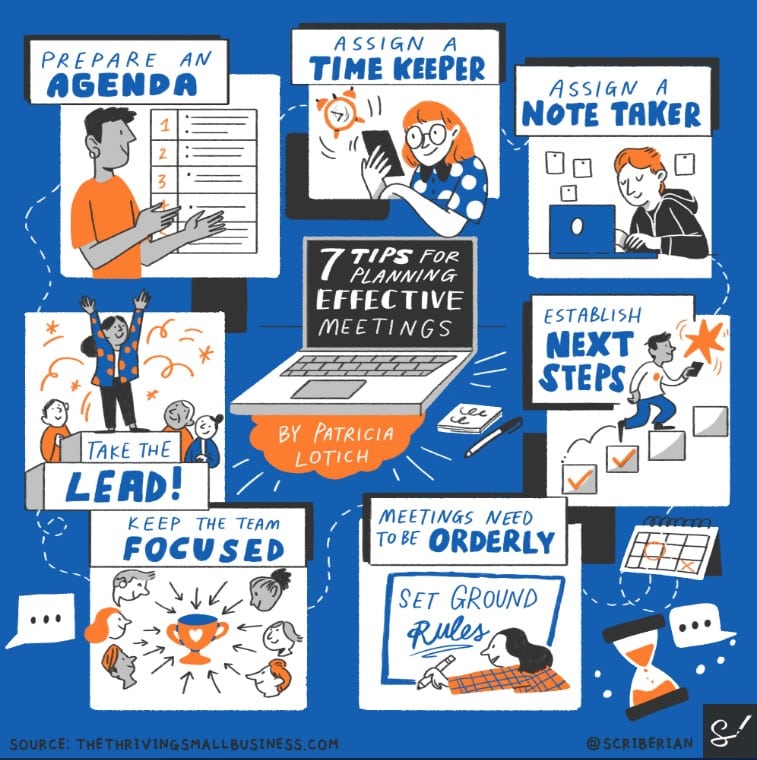
7 Tips For Planning Effective Meetings
1. Prepare an Agenda
Meetings should have a very specific purpose with a goal. This means that every meeting should have an agenda and an efficient meeting structure.
Even teams that meet regularly need a structured format.
If meetings don’t have structure and focus, they have the potential to go down endless rabbit trails that go nowhere.
For instance, an agenda should detail meeting topics, time allocations, and topic matter experts.
The agenda should be realistic for the allotted amount of time for the meeting and the agenda needs to be followed.
2. Effective Meetings Require Leadership
It is the responsibility of the person who initiates the meeting to keep the group on track.
Whether it is the senior executive meeting with his staff, a manager meeting with her employees, or a team leader meeting with a workgroup, someone needs to take lead, keep the group on task and make sure all items on the agenda are addressed.
For instance, a meeting facilitator will ensure that all members participate, that all topics are discussed and that the meeting concludes with the next steps (or homework) for participants.
3. Meetings Need to Be Orderly
The meeting facilitator is responsible for keeping the meeting orderly.
An orderly meeting involves starting and stopping on time, managing group dynamics, and holding the group accountable for adhering to meeting ground rules and doing post-meeting assignments.
For instance, if a team member goes on an unrelated rabbit trail, the facilitator needs to intervene and get the group back on track.
4. Keep the Team Focused
It can be challenging to keep a group focused but it is crucial to keeping the group on task to accomplish what they set out to do.
Every meeting needs a focused agenda.

Inevitable issues will come up in the course of the conversations that need to be tabled until the end of the meeting (if there is time) or until the topic can get added to a future agenda.
5. Assign a Timekeeper
Each agenda item should be timed out so the group understands the amount of time allotted to discuss each agenda item and come to an agreement on the next steps.
The team should assign someone to watch the clock and remind the group when the time has run out for agenda item discussions.
For instance, a 60-minute meeting might allocate 15 minutes to each agenda item.
6. Assign a Note Taker
Another important team role is a note-taker. This is a person who takes notes on everything discussed and documents who will be doing what and by when.
It is amazing how easy it is to forget minor details as soon as the group leaves the room.
This is what I call the accountability document.
The note taker is responsible to send a meeting summary to all participants and including agreed-upon action steps.
Meeting notes should be kept on file, either electronic or paper, for reference as reminders in preparation for the next meeting.
7. Establish the Next Steps
Every meeting should end with the next steps for the group and the assignment of tasks with deadlines.
For instance, let’s say you are facilitating a Facilities Team meeting. The team is discussing new office furniture. A next step might be to assign pricing research to a team member and ask them to report three bids back the next time the team meets.
This is a very important step to keep the ball moving forward. It is the meeting facilitator’s responsibility to ensure all assignments are completed as assigned.
Sample Meeting Agenda
Facilities Committee
Wednesday, 8:00 am – 9:30 am
Team member names: Joe Smith, Karen Jones, Diane Long, Steve Tucker, Gary Craig
Agenda
8:00 Review Last month’s meeting notes
8:20 New Furniture Purchase
8:35 Restroom Remodel
8:55 New Business
9:20 Next Steps
9:30 Meeting Adjourned
Helpful Meeting Tips
- Send the agenda out ahead of time so everyone is prepared to discuss their action steps from the prior meeting;
- Allow social time with the group. This is important so the group can bond and develop as a team.
- Set meeting time aside to simply celebrate and have fun as a group. Effective teams work hard and need to have fun at the end of major accomplishments.
- Don’t get lazy with the agendas or holding people accountable. This is an easy trap to fall into, especially for groups that go on for an extended period of time.
Finally
Organizations spend billions of dollars to pay people to sit in meetings.
It is the management’s responsibility to ensure that the time in meetings is well spent and moves the organization toward the completion of organizational goals.
How effective are the meetings you participate in?